How-toen-USUnedited
How to Store Coffee Beans: Daily Use and Freezer Storage
Written by Citapult for the demo website example.org on October 13, 2026.
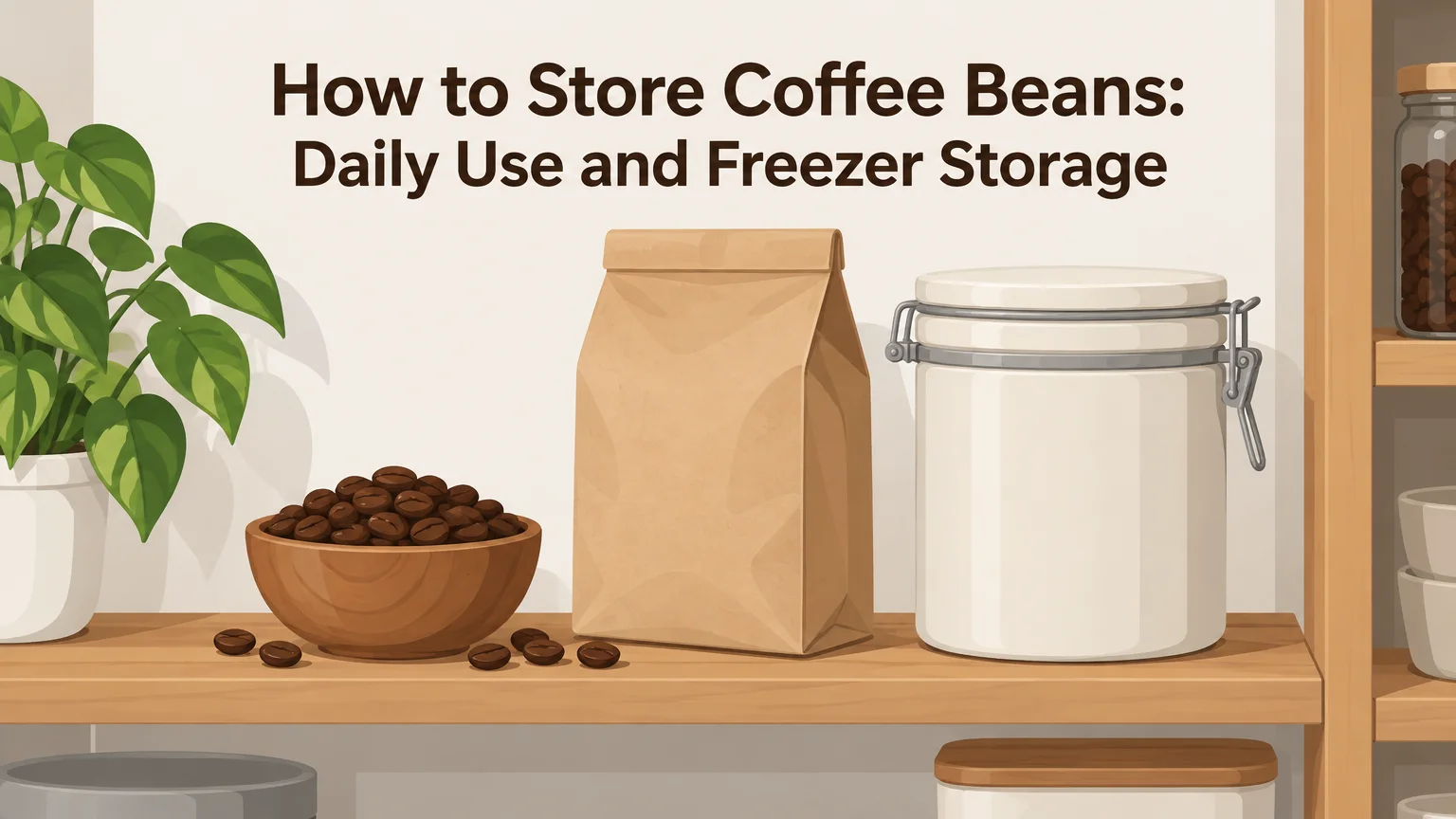
TL;DR: Here’s how to store coffee beans: keep them sealed in a cool, dark cupboard, protected from moisture. Use a resealable valve bag or airtight, opaque container, and grind only before brewing. Freeze extra beans in sealed portions, then let each portion reach room temperature before opening.
- How to store coffee beans after opening
- Choose between the original bag and a coffee canister
- How long do coffee beans stay fresh?
- How to freeze coffee beans without adding moisture
- What is the 15-15-15 rule for coffee?
How to store coffee beans after opening
Store opened, roasted coffee beans in a sealed container inside a cupboard away from heat-producing appliances. Coffee’s main storage enemies are air, moisture, heat, and light.
- Reseal after every use. Close the bag’s resealable strip or the container’s lid after measuring your beans.
- Choose a protected location. Use a pantry shelf away from the oven or dishwasher. Avoid a sunny countertop, even when the container seals tightly.
- Keep the beans whole. Grind only the amount you need immediately before brewing. Grinding exposes more surface area to air and accelerates flavor loss.
- Match purchases to consumption. Buy enough for one or two weeks when practical, instead of opening a large supply at once.
For example, if you brew with 30 grams daily, a 14-day supply is 420 grams. A 1,000-gram purchase would leave 580 grams to keep sealed separately or portion for freezing.
Choose between the original bag and a coffee canister
Keep beans in their original bag when it has a reliable resealable closure and a one-way valve. A suitable valve bag works well for short-term storage, so transferring beans is optional. For a supply you finish within a few weeks, specialized canisters offer only modest benefits.
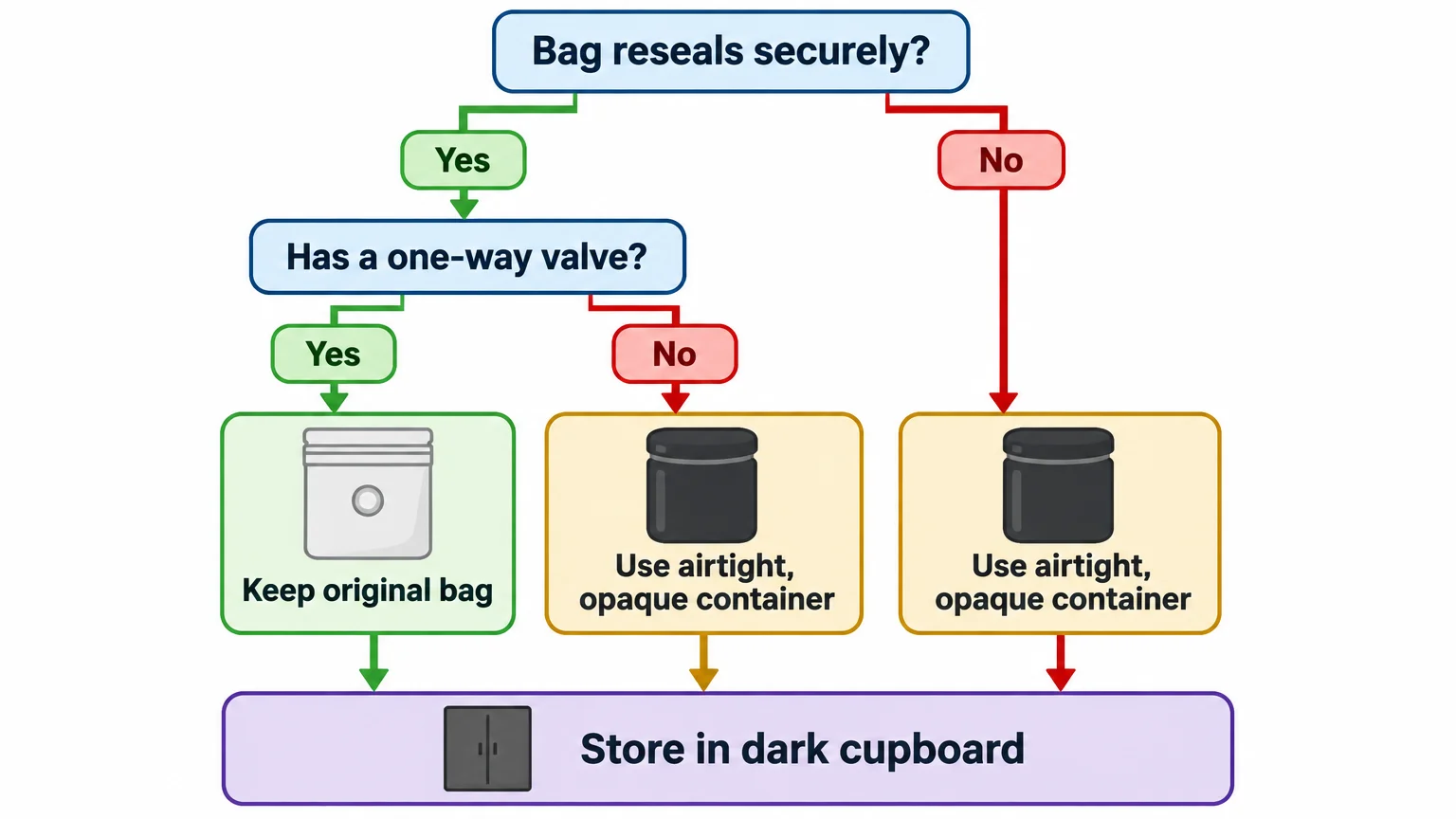
A one-way valve is a vent that lets roasting gases escape while limiting incoming air. Roasted beans release carbon dioxide; the valve handles that release without leaving the package open. However, a valve does not replace a secure closure.
If the bag cannot reseal securely, use an airtight, opaque container. A clear glass jar with a tight lid can work inside a dark cupboard. An open jar displayed beside the brewer leaves beans exposed.
Vacuum or air-displacement canisters reduce oxygen exposure. Choose secure sealing and suitable placement before buying specialized storage equipment.
How long do coffee beans stay fresh?
Opened whole beans kept airtight at room temperature retain freshness for approximately 1–3 weeks. Treat that range as a flavor guide: roast age, packaging, and storage conditions affect the result.
The following ranges assume opened coffee is stored airtight, according to the National Coffee Association’s consumer freshness guide.
| Coffee and storage | Approximate freshness window | How to use the estimate |
|---|---|---|
| Whole beans, room temperature | 1–3 weeks | Size your everyday supply around this window |
| Ground coffee, room temperature | 1–2 weeks | Keep sealed between uses |
| Whole beans, frozen | 3–4 months | Reserve for supplies you will use later |
These estimates describe retained freshness, not a universal expiration deadline. Check the roast date separately: opening an older bag does not restart its flavor window. For unopened packages, the same guide uses the printed best-by date.
For many coffees, peak flavor falls around 1–2 weeks after roasting. Very recently roasted coffee may need time to release carbon dioxide before brewing; espresso commonly benefits from at least four to five days of rest. As coffee ages, fading aroma, a flat cup, and papery or rancid notes signal deterioration.
Staling primarily concerns flavor quality. Visible mold indicates spoilage and can develop after moisture exposure; discard moldy beans.
How to freeze coffee beans without adding moisture
Freeze extra beans in small, airtight portions, and thaw each portion while it remains sealed. This method slows staling while preventing condensation on cold beans.
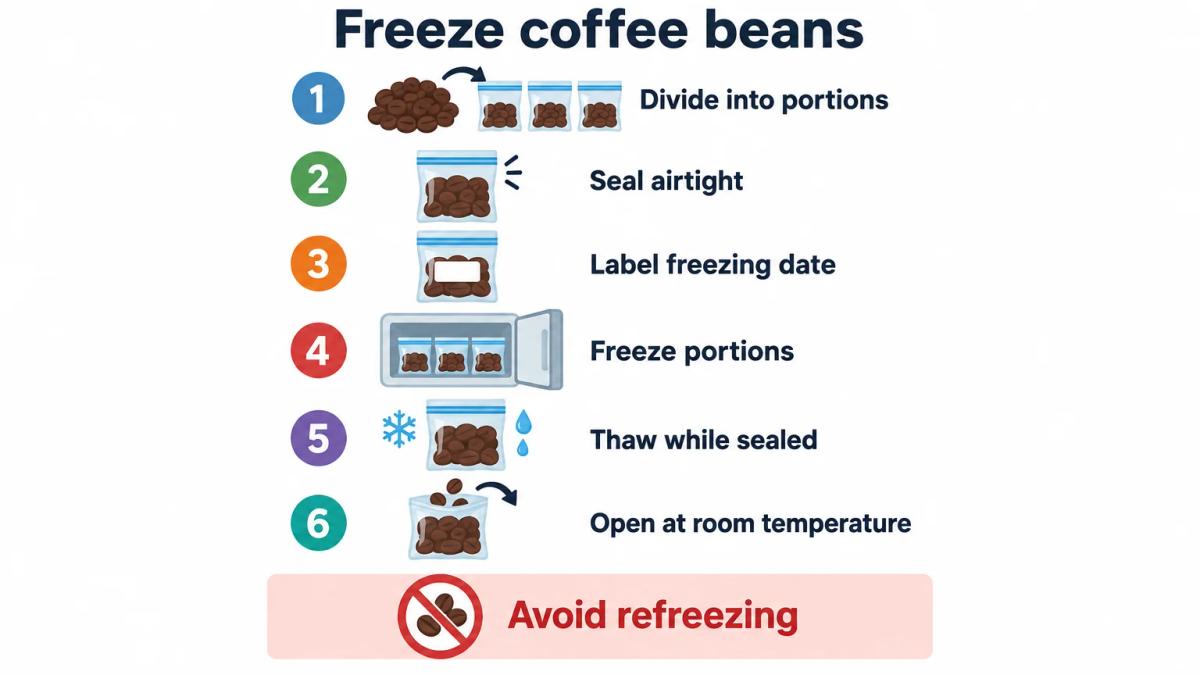
- Divide beans into portions you can use soon after thawing, keeping your everyday supply separate.
- Seal each portion in a freezer-safe airtight container or vacuum-sealed bag.
- Mark the contents and freezing date so you can track your stored supply.
- Remove only the portion you need, leaving the others frozen.
- Let that portion reach room temperature before opening, then store it using your normal cupboard method.
At the assumed 30 grams daily, split the earlier 580-gram surplus into 420-gram and 160-gram portions. If freezing the larger portion on June 1, label it “Whole beans, 420 g, frozen June 1.”
Keep thawed portions out of the freezer. Repeated freezing and thawing can introduce moisture, so avoid moving the entire supply between the counter and freezer daily.
Skip the refrigerator for everyday storage. Coffee can absorb moisture and food odors, and frequent temperature changes increase condensation risk. For example, a poorly sealed container beside leftovers exposes beans to surrounding odors and humidity.
What is the 15-15-15 rule for coffee?
The 15-15-15 rule is a freshness mnemonic: 15 months for green beans, 15 days for roasted beans, and 15 minutes for ground coffee. The clocks start at harvest, roasting, and grinding, respectively.
The grinding-to-brewing interval is a reminder to preserve peak aroma. The table’s longer ground-coffee window describes freshness during sealed storage; the two measures serve different purposes. Use the mnemonic as a prompt to track freshness, without treating it as a food-safety deadline or a guarantee of identical flavor across coffees.
Last updated: October 13, 2026